Designed To Educate, Motivate & Inspire
The Western Way Journal
Ants - A Recent Job & Some Homeowner Tips
By Daniel, Pest Manager, Western Way Termite & Pest Services
What We Walked Into
March is when we start getting steady calls about ants along the California Coast & Bay Area. It’s usually the same kind of story. A homeowner notices a few ants near the sink or along a baseboard and assumes it’s just the season changing. Then a few turn into a steady line.
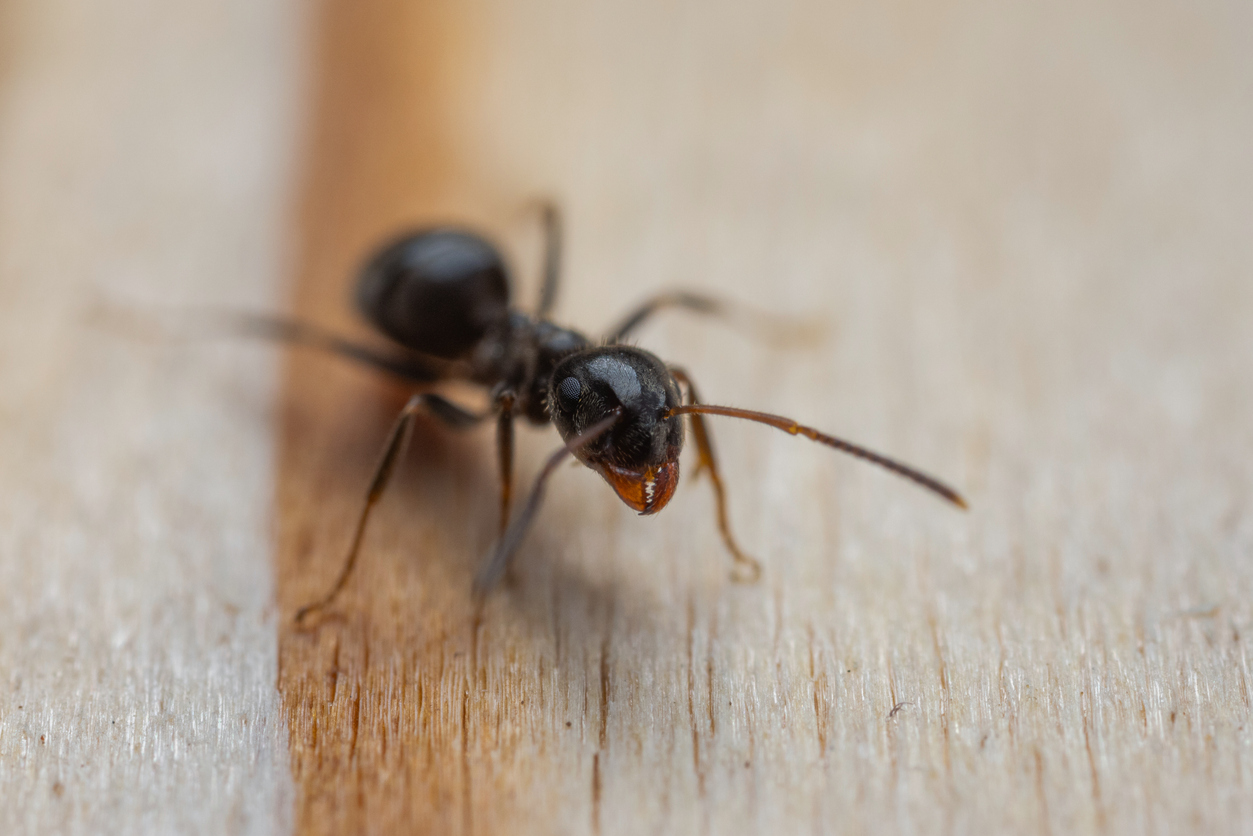
A couple of weeks ago, we got a call from a homeowner in the Bay Area who said they were seeing ants every morning near the kitchen window. It wasn’t overwhelming, but it was consistent. The home was clean and well maintained. No major damage. Just small black ants appearing in the same spot day after day.
The Problem
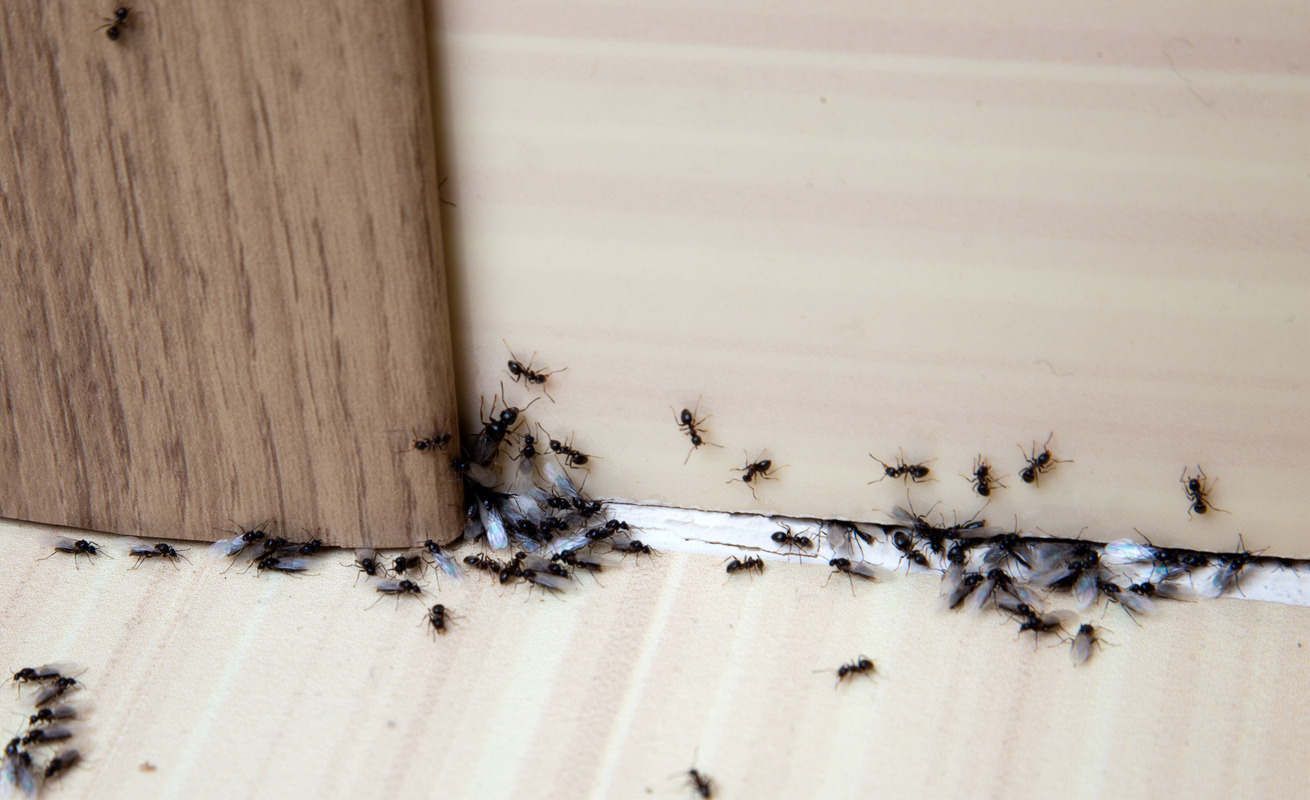
When we arrived, the ants weren’t everywhere. They were concentrated along one section of the kitchen wall and near the sliding door that led to the backyard. That pattern usually tells me they’ve already established a route.
Outside, we found the source of the activity. There was mulch sitting right up against the foundation and a small moisture issue near a hose connection. Ants don’t need much. Moist soil and easy access are enough.
Inside, the homeowner had been wiping the counters and spraying store-bought products, but the ants kept coming back. That’s because most of the colony was likely outside or inside the wall void. What you see inside is usually just a small percentage of what’s there.
The frustration wasn’t about damage. It was about repetition. No one wants to wake up every morning and see a line of ants running across the counter.
Why Ant Activity In March Matters
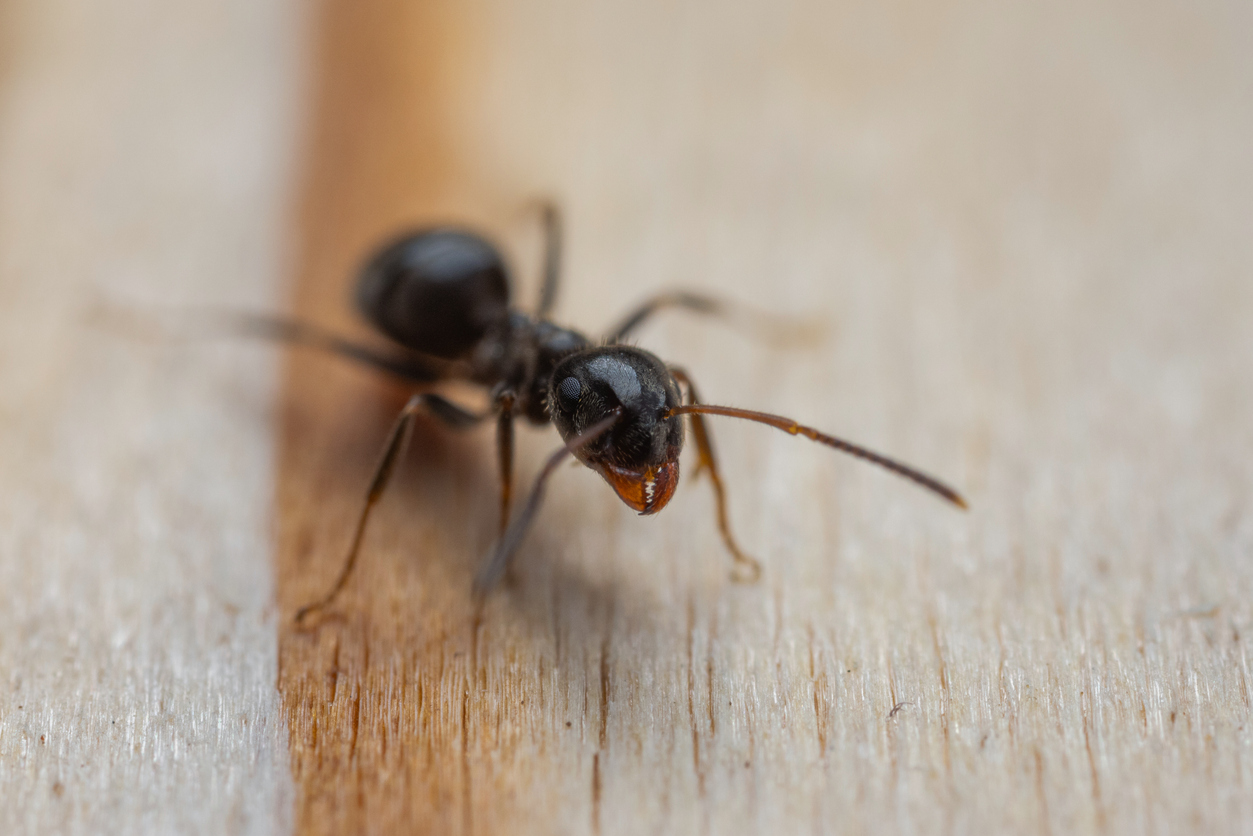
Ants tend to pick up activity in March because the ground is starting to warm up, even if the weather still feels mild. A lot of homeowners assume ant season starts later in spring, but by the time you’re seeing them inside, they’ve usually already been active for a while outside.
What happens most often is this: ants send out scouts. Those scouts are looking for moisture and easy food sources. A small drip under a sink, condensation near a window, a few crumbs under an appliance — that’s enough to draw them in. Once they find something reliable, they leave a scent trail. That’s when a few ants turn into a steady line.
If that pattern isn’t interrupted, the colony keeps using the same route. In some cases, they’ll start branching off into other rooms. Kitchens and bathrooms are common starting points, but I’ve seen them move into laundry rooms, garages, and even upstairs areas once they’ve established access.
For this homeowner, it wasn’t about being overwhelmed. It was about uncertainty. They didn’t know if they were looking at something minor that would fade out, or the beginning of something that would spread through the house. That’s usually when it makes sense to take a closer look — not because it’s urgent, but because understanding what’s happening early makes everything easier to manage.
How We Handled It
We started outside. Ant control almost always begins there.
We checked:
Foundation edges
Hose bibs and moisture points
Landscaping that touched the home
Gaps around doors and windows
Once we identified where they were entering, we treated those areas directly.
Inside, we treated the active travel routes and entry areas rather than just the visible ants. The goal wasn’t to eliminate a line — it was to interrupt the pattern completely.
We also addressed the moisture issue near the hose and recommended pulling mulch back several inches from the foundation.
Everything was done step by step. No rushing. No unnecessary treatment. Just focusing on the areas that mattered.
The Result
Within a short time, the ant line stopped completely. The steady trail that had been showing up along the counter each morning was gone. There were no new ants near the sliding door, and no random strays appearing in other parts of the kitchen.
We kept monitoring the areas we treated, both inside and outside, to make sure the activity didn’t restart. It didn’t. Once the entry points and source were handled, the pattern was broken.
What stood out most was how relieved the homeowner felt. They told me they had gotten into the habit of walking into the kitchen first thing every morning just to check the counter. That routine stopped. They weren’t looking for movement anymore or wondering if they needed to wipe everything down again before making coffee.
The house felt normal again. Not something they had to think about constantly.
That’s usually the biggest change — not just the absence of ants, but the absence of that daily low-level stress that comes with seeing them over and over.
What I Told Them To Do Moving Forward (DIY Tips)
Before wrapping up, I shared a few simple habits that help reduce spring ant issues:
Keep mulch and soil pulled back from the foundation
Fix small moisture problems quickly
Avoid leaving pet food out overnight
Seal small cracks around windows and doors
Clean up sugary spills right away
They followed through, and it helped prevent new activity.
When Professional Help Makes Sense
Ants are one of those pests where DIY can work temporarily, but not always long-term. If the colony is outside or inside wall spaces, surface sprays won’t solve the real issue.
That doesn’t mean every ant sighting requires treatment. It means paying attention to patterns. If ants keep returning to the same place, there’s usually a reason.
Most of the calls I get across the California Coast & Bay Area are from homeowners who noticed something small and wanted to be sure. In many cases, catching it early makes everything easier.
Final Thoughts
March is when ant activity quietly starts building. It doesn’t begin with an invasion. It begins with a few.
If you’re seeing consistent activity, it’s worth taking a closer look before it spreads.
If you need help or just want someone to check things over, we’re here.
– Daniel


Services
Office
8505 Church St Suite 7 Giloy, CA 95020
Copyright 2024. All Right Reserved.